If you live in Calgary or the surrounding areas, you already know the deal with our water. It’s “hard”: really hard. Between the minerals from the Bow River and the seasonal shifts in our local supply, your home appliances and your body take a beating. That is exactly why so many of us rely on a Reverse Osmosis (RO) system to provide clean, crisp drinking water.
But here is the catch: an RO system isn’t a “set it and forget it” appliance. To keep it performing at its peak and to ensure you aren’t drinking the very impurities you’re trying to filter out, you need to monitor it. The most effective, low-cost way to do that? A TDS meter.
In this guide, we’re going to walk you through exactly how to use a TDS meter, how to interpret the results, and how this simple tool can save you hundreds of dollars by protecting your RO membrane.
What is TDS and Why Should You Care?
TDS stands for Total Dissolved Solids. It is a measure of the combined content of all inorganic and organic substances contained in a liquid in molecular, ionized, or micro-granular suspended form. In simpler terms: it’s a tally of everything in your water that isn’t water.
Common dissolved solids include:
- Calcium and Magnesium (the “hard” in hard water)
- Sodium
- Chlorides
- Sulfates
- Heavy metals like lead or arsenic
In Calgary, our tap water TDS can often range from 200 to 400+ parts per million (PPM). While not necessarily “unsafe” at these levels, high TDS affects the taste of your water and leads to scale buildup in your kettle, coffee maker, and plumbing. A high-quality water filtration system is designed to strip these solids away, leaving you with pure H2O.
Your Best Friend: The Digital TDS Meter
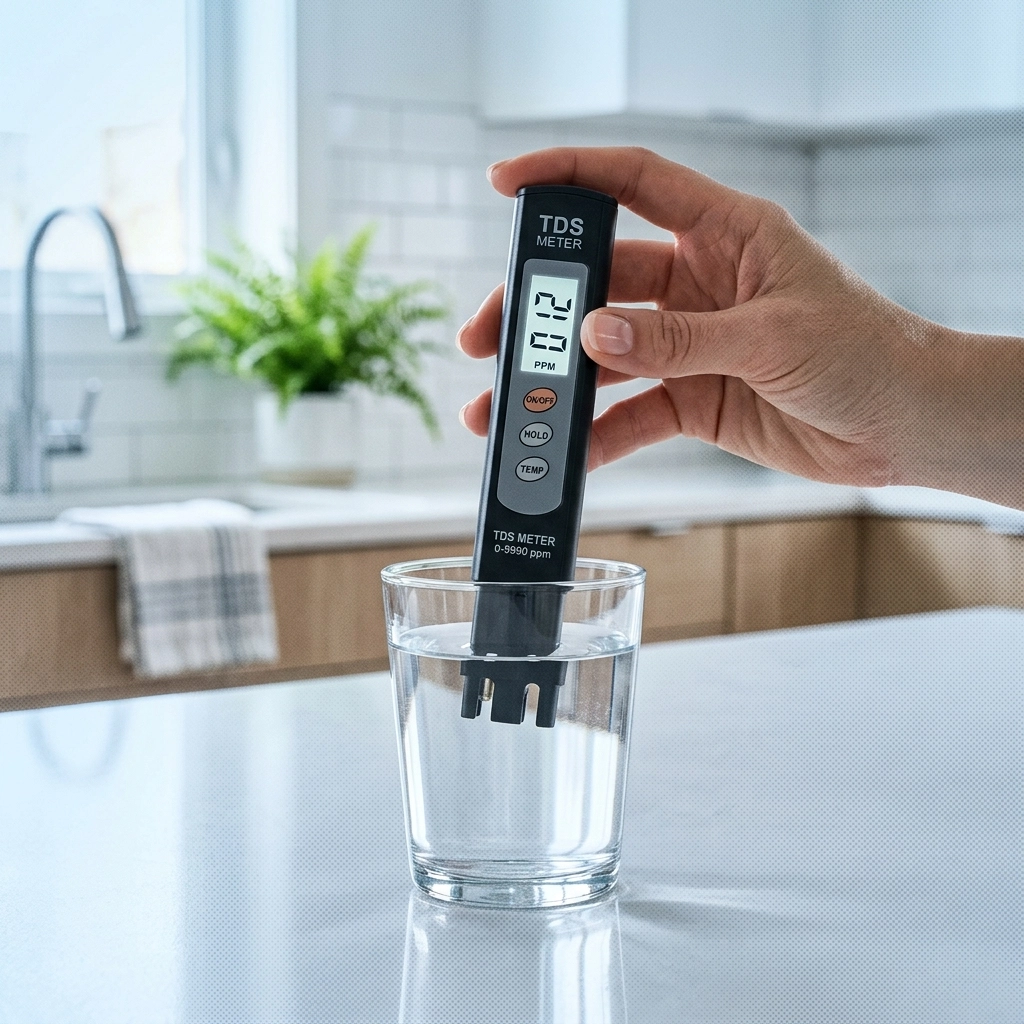
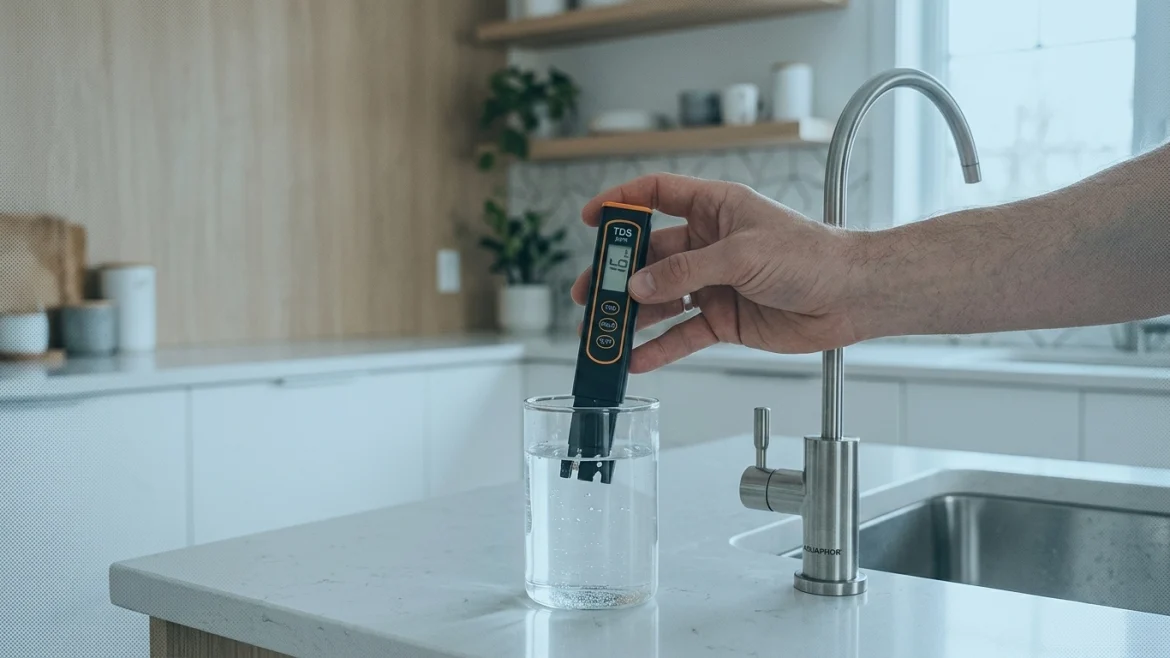
A TDS meter is a small, handheld device that looks a bit like a digital thermometer. It works by measuring the electrical conductivity of the water. Since pure H2O has virtually zero conductivity, the meter can calculate the concentration of dissolved solids based on how well electricity flows through the sample.
Why every RO owner needs one:
- Verification: It proves your system is actually working.
- Timing: it tells you exactly when to replace filters rather than guessing based on the calendar.
- Protection: It helps you identify when a pre-filter has failed before it ruins your expensive RO membrane.
Step-by-Step: How to Test Your RO System
Testing your water is a quick 2-minute process. To get an accurate reading and truly understand your system’s health, you need to test two different sources: your raw tap water and your RO product water.
Step 1: Measure Your Tap Water
Before you can know if your RO system is doing its job, you need to know the baseline.
- Turn on your cold water kitchen faucet and let it run for about 30 seconds.
- Fill a clean glass or the cap of the TDS meter with about an inch of water.
- Turn on the TDS meter and submerge the probes into the water.
- Wait for the reading to stabilize (usually 5–10 seconds) and write down the number. This is your Feed Water TDS.
Step 2: Measure Your RO Water
Now, let’s see what the filter is doing.
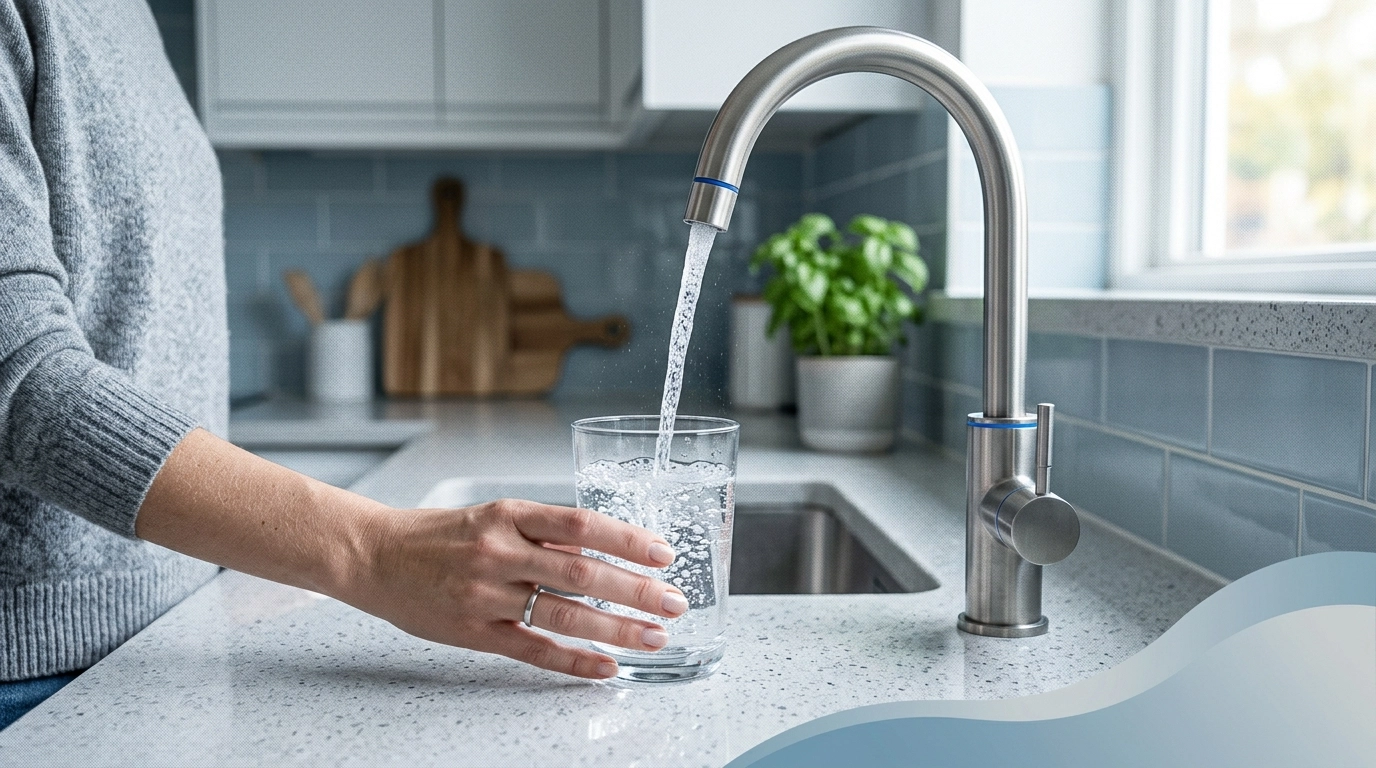
- Turn on your RO faucet.
- Pro Tip: Let the water run for 10-20 seconds first. This flushes out any “TDS creep” that might have occurred while the system was idle.
- Rinse your testing container with a little bit of RO water first to ensure there is no residue from the tap water test.
- Fill the container and submerge the TDS meter probes.
- Record the number. This is your Product Water TDS.
The Math: Calculating Your Rejection Rate
Now that you have your two numbers, it’s time to see if your system is performing like a pro. We calculate this using the Rejection Rate.
A healthy Reverse Osmosis membrane should typically remove 90% to 98% of dissolved solids. Here is the simple formula to check yours:
((Tap TDS – RO TDS) / Tap TDS) x 100 = % Rejection
Example:
- Tap Water TDS: 300 PPM
- RO Water TDS: 15 PPM
- (300 – 15) = 285
- 285 / 300 = 0.95
- 0.95 x 100 = 95% Rejection
In this scenario, your system is working perfectly! You’re enjoying high-quality water and your membrane is in great shape.
When Should You Change Your Filters?
This is the question we get most often at Waters Softeners and Filters. While the manufacturer might say “change every 6 months,” your TDS meter gives you the real-world truth. In Calgary, Okotoks, Airdrie, and nearby communities, checking your TDS levels every 4–6 months is a smart, reliable habit.
The Membrane (The Heart of the System)
The RO membrane is the most expensive part of your system. You should consider replacing it if:
- The Rejection Rate drops below 80%. If your tap water is 300 PPM and your RO water climbs above 60 PPM, the membrane is likely “fouled” or exhausted.
- Your lowest recorded TDS number has increased by at least 10 points. That kind of change is a practical warning sign that your filters or membrane are starting to give up.
- The water flow slows down significantly. Even if the TDS is low, a clogged membrane will struggle to produce water.
The Pre-Filters (The Bodyguards)
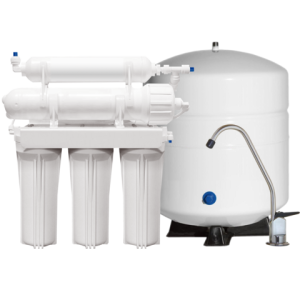
Your RO system usually has one or two pre-filters (sediment and carbon). Their job is to catch the “big stuff” and, most importantly, remove chlorine. Chlorine is the #1 enemy of an RO membrane: it will literally eat holes in it.
- Learn to watch for shifts: if you notice your RO TDS starting to creep up slowly over a few weeks, it’s often a sign that your carbon pre-filter is no longer neutralizing chlorine effectively, allowing it to damage the membrane.
- Important note: If your system uses a remineralizing filter, your final TDS number will naturally read higher because healthy minerals are being added back into the water.
- Expert Advice: Change your pre-filters every 6–12 months regardless of the TDS reading to ensure the membrane stays protected.
The Risks of Ignoring Your TDS Levels
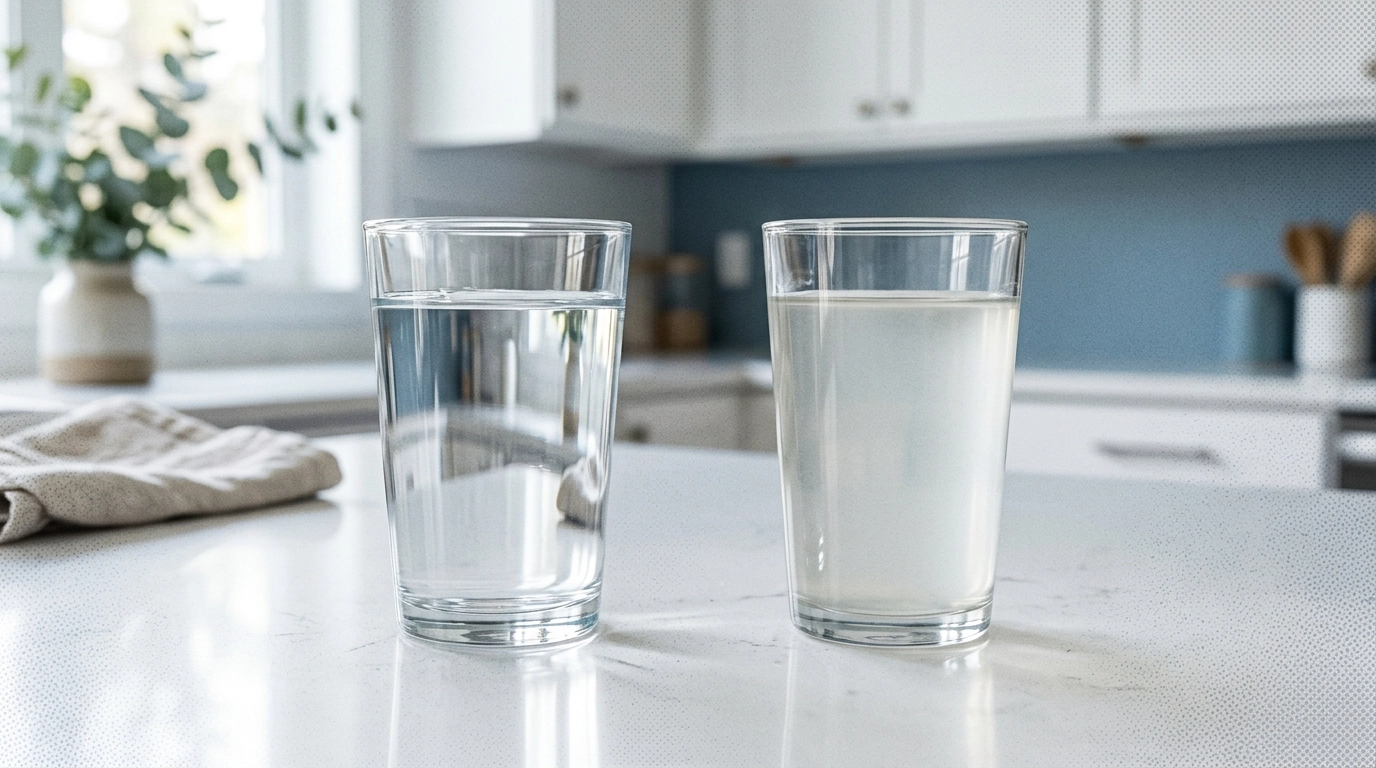
Wait too long to service your system, and you’ll start to see the consequences:
- Taste and Odor: That crisp, bottled-water taste will vanish, replaced by the metallic or chemical “twang” of Calgary tap water.
- Appliance Damage: If you use RO water in your humidifiers, espresso machines, or irons, high TDS water will cause scale buildup, eventually killing the heating elements.
- Health Concerns: The whole point of an RO system is to remove impurities like lead, nitrates, and fluoride. If the membrane fails, those contaminants are coming right through your tap.
Why Professional Maintenance Makes a Difference
While testing with a TDS meter is easy, interpreting a system failure can be tricky. Sometimes high TDS isn’t a bad filter: it could be a faulty check valve, a torn O-ring, or a storage tank that has lost its pressure.
At Waters Softeners and Filters, we don’t just sell systems; we provide long-term solutions. Whether you need a professional installation or a comprehensive water quality audit, our team is here to help. We understand the specific water chemistry of Calgary and surrounding areas like Okotoks and Airdrie, and we can recommend trusted solutions for our unique hard water challenges.
If your TDS readings are looking a bit high, or if you simply haven’t had your system looked at in over a year, don’t wait for the water to turn cloudy. Contact us today to schedule a service call. We’ll make sure your filters are fresh, your membrane is protected, and your family is drinking the cleanest water possible.
Summary Checklist for RO Owners
- Check TDS every 4–6 months: It only takes two minutes and helps you spot performance changes before they become expensive problems.
- Keep a log: Write your readings on a sticker on the RO tank so you can see trends over time.
- Sanitize: When you do change your filters, ensure the housings are sanitized to prevent bacterial growth.
- Ask an expert: If your rejection rate is low but your filters are new, there might be an internal pressure issue.
Explore our range of high-performance Reverse Osmosis Systems and start taking control of your home’s water quality today!